
Check a Chevrolet History by VIN Before Buying
Buying a used Chevrolet? Start with a VIN check to confirm basic vehicle details. A full history report can help you review available title brands, accident records, mileage readings, ownership changes, and other reported events.
Compare the results with the vehicle and its documents before making a purchase decision.
What is a Chevrolet VIN Check?
A Chevrolet VIN check uses a vehicle's identification number (VIN) to find available information about its history. It can help buyers and sellers learn more about a Chevy before making a deal.
Each vehicle has a unique VIN that you can enter into a Chevrolet VIN lookup tool to confirm the vehicle’s identity and access records of accidents, thefts, title brands, auctions, sales, service and maintenance, and more. This helps you make a wise choice before buying or selling.
What Does a Chevrolet VIN Check Provide?
A Chevrolet VIN check can reveal useful details about a vehicle's past. The records available depend on the vehicle and its history. Here’s what to expect:
Accident History
See if the car was involved in an accident in the past. With a VIN check, you can see complete information on when the vehicle was involved in an accident.
Accident Severity Classification
The report usually groups them with terms like "minor," "moderate," or "severe." Look at the date and the mileage, too. A big accident that happened not long ago can be a strong warning sign.
Repair Quality Assessment
The repair costs also give clues about how heavy the damage was. If the same part was fixed many times, the issue might be deeper.
Airbag Deployment Records
You should also check if the airbag was replaced the right way. A wrong installation can be unsafe. In some states, a crash with airbag deployment can lead to a title issue.
Ownership History
The number of owners, how the car was used, and where it lived can affect its performance and value in the future.
Number of Previous Owners
Cars with fewer owners sometimes have more steady care. But if the car changes owners too often, there might be hidden issues.
Lease vs Personal Ownership History
A leased Chevrolet may have higher mileage, but it usually gets regular service. Rental cars are used by many drivers and are often pushed hard. Personal ownership depends on the person’s habits.
Registration History by State
Cars that move between states get new records issued. This is where odometer issues can occur. Climate also matters. Cars from cold or salty areas may have rust underneath.
Title Brand Checks
Check for any title brand on the Chevrolet. A salvage title shows it was once a total loss, while a flood title can hide deep water damage. Rebuilt cars come from old salvage units, so risks remain. A lemon buyback means the car had problems that kept returning.
Salvage
The car was deemed a total loss by an insurance company. If the car is marked as salvage, avoid it at all costs.
Flood Title Check
The car was submerged in water, often leading to serious electrical and rust issues. Watch for that musty smell under the seats.
Rebuilt Title Check
A previously salvaged vehicle that has been repaired and passed an inspection so it can be driven again.
Lemon Law Buyback
The manufacturer repurchased the car due to ongoing defects that might be hard to repair.
Maintenance and Service Records
Chevrolet cars can last long with the right care. Without proper service, they can develop costly issues later.
Chevrolet Dealership Service History
Dealership logs show what services were done and when. Look for steady oil changes and major service work. Some newer Chevrolets may also store digital logs in the system.
Scheduled Maintenance Compliance
This checks if the owner followed the routine maintenance schedule. Long service gaps are not good. Check if belts, fluids, and other important items were done when required.
Market Value and Pricing Data
This helps you compare the price of the Chevrolet with other similar cars by providing real market evaluation data.
Current Market Value Estimation
A clean Chevrolet with no major issues is worth more. If the car has accident marks or a title problem, the value drops, helping you avoid overpaying.
Trade-in, Retail, and Private Sale Records
Trade-in prices are the lowest, retail prices are the highest, and private sales fall somewhere in the middle. Comparing them makes it easier to know whether the seller is overcharging.
Warranty Information
Find out the available warranty coverage provided by the manufacturer when the Chevrolet was new.
Warranty Types
See if it's covered by corrosion protection, roadside assistance, manufacturer warranty, and extended warranty.
Warranty Limit
Check the limit of each covered warranty in terms of the years covered and the mileage limit.
Chevrolet Recalls
Recalls must be completed because they are tied to safety or emissions. The report shows whether the recall was properly addressed.
Chevrolet Recall Information
See the detailed recall information, like date, causes, and how the issues were handled.
Sales and Auction History
You can see the complete sales timeline if you get the full report.
Sales History
This shows the dates the car was bought and sold. If it was sold again soon after a repair, it may be a sign that the owner was rushing to get rid of issues.
Auction History
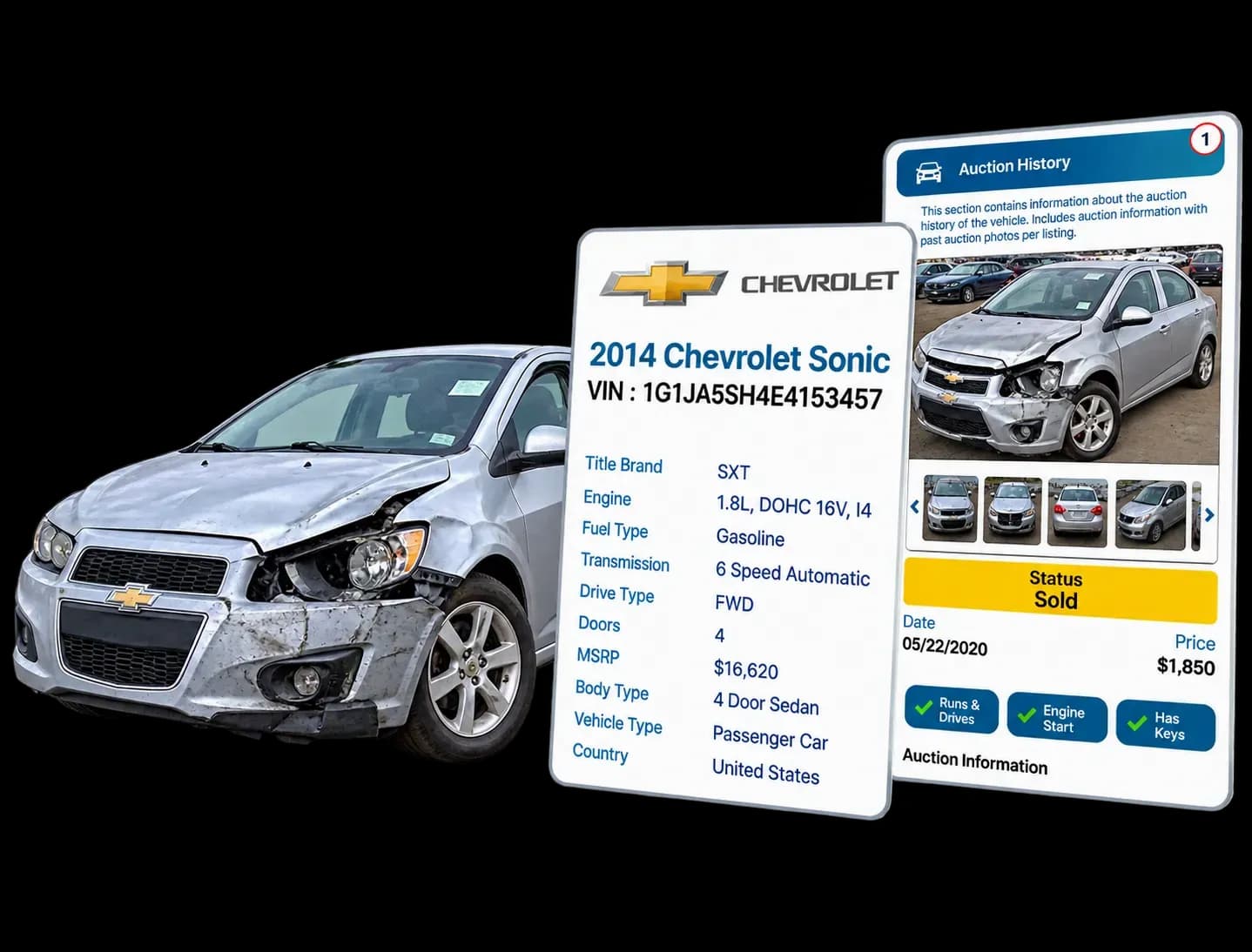
If the Chevrolet appeared in an auction, the report tells you the place, the date, and the selling price. The reports even show pictures from the auction so you can see the car’s condition at that time.
Where to Find Your Chevrolet VIN
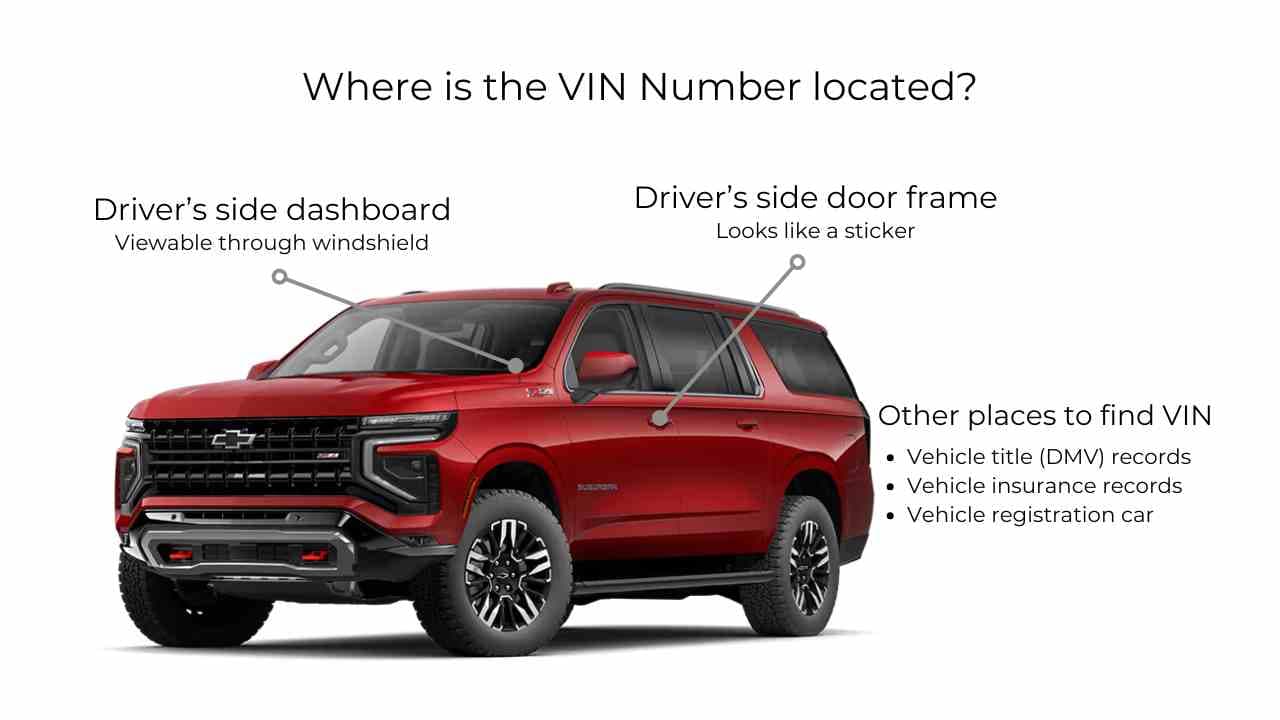
You can locate your Chevrolet VIN on the vehicle or its documents. Check these five common locations:
- Driver’s Side Dashboard: Visible through the windshield near the driver’s side.
- Driver’s Door Jamb: Check the identification label inside the driver’s door.
- Vehicle Documents: Listed on the title, registration, or insurance card.
- Under the Hood: May be stamped on the engine block or firewall.
- Frame Rail on Older Chevy Trucks: May be stamped along the driver’s side frame.
How to Perform a Chevrolet VIN Lookup
Using the VIN decoder is not hard, but you must enter the number the right way. Some people type only part of it and expect the right result, but that will not work. You need all 17 characters to get proper data.
Locate the 17 Digit VIN
You can find the VIN on the driver's side dashboard or on documents, like the registration card. Look at the VIN on the car and compare it with the one printed on the papers. Both must be the same.
Enter VIN in Form
After you get the complete VIN, type it into the form and press the button to continue.
View the Result
When the system finishes, you will see the specs, the market value, the MSRP, and the country where the Chevrolet was made. If you want more details, like accident records, recalls, auction events, or service history, choose the premium vehicle history report.
What a Chevrolet Vehicle History Report Cannot Confirm
A Chevy VIN report is useful, but it cannot reveal every detail about a vehicle. Some events are never reported, and records may be missing or outdated.
Every Past Accident
A Chevy history report cannot confirm every accident. Minor crashes or repairs handled without insurance may never appear in available databases, so inspect the vehicle carefully.
Current Mechanical Condition
A VIN report cannot tell you exactly how the engine, brakes, transmission, or other parts work today. Arrange a professional inspection before buying.
Complete Ownership Details
A Chevy VIN check may not provide every previous owner and their registration details. Also, it won’t show the name, address, and phone of the reported owners due to privacy rules.
Unreported Damage or Repairs
A report cannot guarantee that a Chevrolet has never suffered damage. Repairs completed privately may not appear, so review the vehicle and its maintenance records.
Why Run a Chevrolet VIN Check Before Buying or Selling?
Buyers and sellers use VIN checks for different decisions. A history report can flag recorded concerns, but it cannot replace title verification or a physical inspection.
Buyers
Compare the VIN with the vehicle and paperwork before paying. Review reported title, accident, and mileage entries, then arrange an independent inspection for concerns.
What You’ll Get with a Free Chevrolet VIN Check
With a free VIN decoder, you’ll get the basic specifications and more. Here’s what you’re likely to get for free before upgrading to get the vehicle history report:
Vehicle Specifications
Check the available model year, make, model, body style, engine, and drivetrain details. Compare them with the listing and vehicle to identify possible discrepancies.
Original MSRP
View an MSRP reference when available to understand retail pricing. For a vehicle’s specific options and packages, a window sticker provides detailed factory information.
Market Value
Review an estimated market value when provided, then compare similar listings and the vehicle’s condition. An estimate is guidance, not a confirmed selling price.
A Real Case of Why Checking a Chevrolet VIN is Crucial
Jesse wanted to purchase a used 2014 Chevrolet Sonic in Las Vegas from a private seller. Before he decided to pay the down payment, he checked the Chevrolet VIN using our tool to confirm the car’s condition. Here’s what the report reveals:
First Impression
1. Has no visible dents or scratches
2. Lower mileage than other cars
3. A bit cheaper compared to the other seller
What the Report Showed
1. Marked as salvage and rebuilt
2. 1 accident record
3. Minor/major damage from an accident
4. 3 service & repair records
5. 5 lien or loan records
Buyer’s Response
Jesse walked away because he found out that the car was involved in an accident, with a salvage-branded title and multiple lien/loan records.
Lessons Learnt
1. Always run a VIN check before deciding to purchase a used vehicle.
2. Do not assume the listing or seller’s claims are accurate. Choose to buy from reputable dealers instead of private buyers.
Why Choose Our Chevrolet VIN Check Service?
Our Chevrolet VIN check provides every reported record that you need to know about the vehicle. You can start for free to view the vehicle’s specifications, market value, MSRP, and easily upgrade to access the full vehicle history report.
Here’s what sets us apart from other providers:
- No sign-up required. Just enter the VIN to start your search.
- Access auction photos (up to 10) when available.
- Only $24.99 per report, over 50% cheaper than Carfax.
- No expiration. Access your report anytime.
- Downloadable report in printable PDF.
- No hidden fees. What you see is what you pay at checkout.
Explore Related Chevrolet VIN Tools
A VIN check helps investigate recorded history, but other Chevrolet tools answer different questions. Explore these related services when you need factory details, recall information, or additional records.
Get a Chevrolet VIN Check Before You Buy
Before buying a used Chevrolet, review its available history records to spot possible concerns and ask better questions. Enter the VIN to begin your journey to buying with absolute confidence.
Frequently Asked Questions About Chevrolet VIN Check
Can you run a Chevrolet VIN Check in Canada?
Yes, you can run a VIN check in Canada using our Chevrolet VIN lookup to find available vehicle records. These tools can show accident history, title information, lien records, theft records, and more.
Can I check a Chevrolet VIN for free?
Yes, you can check a Chevrolet VIN for free to preview basic specifications, such as model year, make, model, and engine details. A full history report may require payment.
How do I check a Chevrolet VIN before buying a used car?
To check a Chevrolet VIN before buying, enter the VIN into our lookup tool, review available history records, verify the title, and arrange a professional vehicle inspection.
Can a Chevrolet VIN check show accident history?
Yes, a Chevrolet VIN check can show reported accident or damage records when available. However, not every accident is reported, so inspect the vehicle before buying.
Can I check a Chevrolet VIN for title problems?
Yes, a Chevrolet VIN check can reveal recorded title brands, such as salvage or rebuilt titles. You’re still required to confirm the vehicle's current title with the relevant state agency.
Can I check a Chevrolet VIN using a license plate?
Yes, you can use a US license plate lookup if the service supports it. Enter your plate details to identify the vehicle and review available information.
Does a Chevrolet VIN check show current recalls?
A Chevrolet VIN check may include available recall information from the sources. However, current recalls that are yet to be updated in the database won’t show up. Ensure you always use the official NHTSA recall lookup or contact Chevrolet to confirm open recalls for your vehicle.